
🆘🔥🟢 Dogbones on fire...
Don't let this happen to you!


Everyone,
Time to check your shore power connections (especially dogbone adapters and surge protectors) for any signs of oxidation or overheating. And since it’s getting very hot around the country, air conditioners are pulling additional amperage, which only compounds the problem of a high-resistance connection in shore power plugs and receptacles. I just saw this post in RV Lifestyle Group yesterday.

Anyone ever seen this happen before? Owner of the campground called me said my plug was on fire. Only burnt up at the 30-50 amp adapter? Just curious if anyone else has had this issue? Update!!! connection is very tight. It’s a tough plug to unplug and plug in. Also nothing in the camper is on or running, no ac, heat, lights nothing was running no one was there. Nothing besides the 12v refrigerator and the small little outside light.- Keith
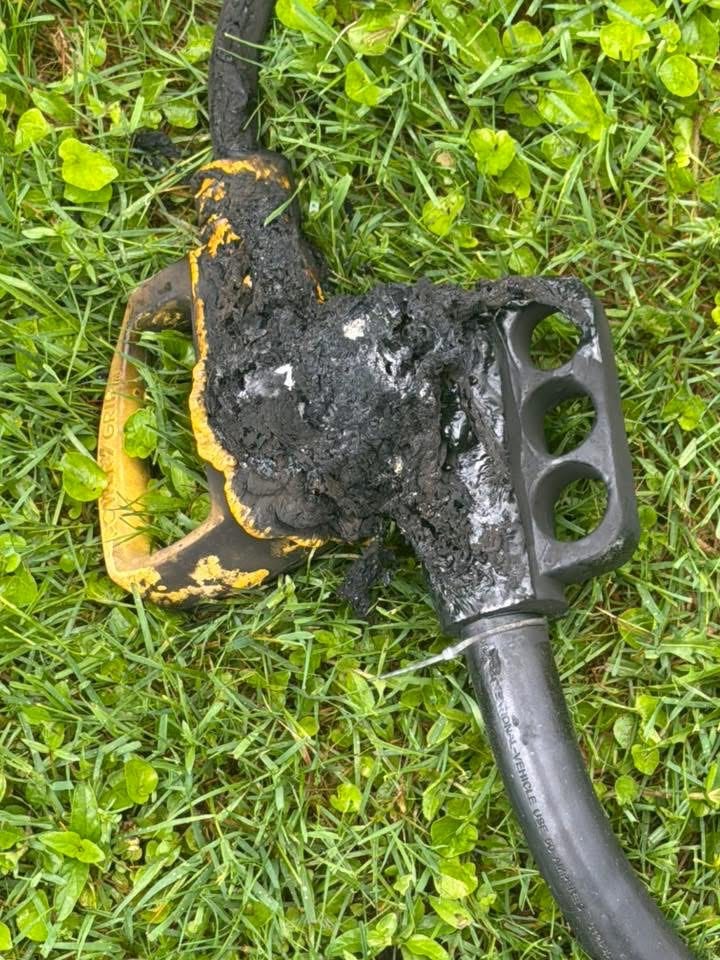
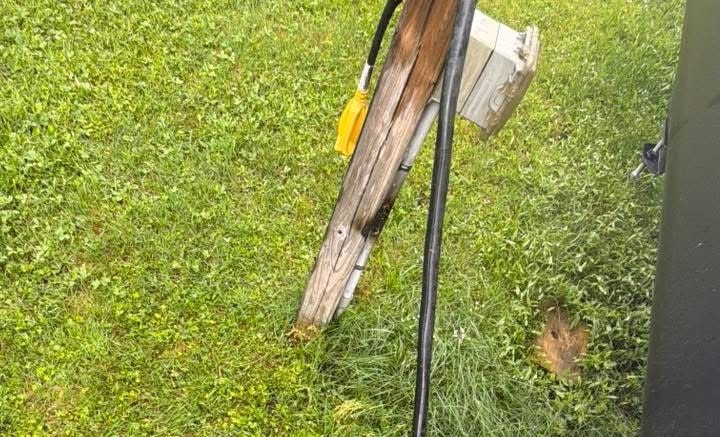
Hey Keith (and anyone plugging into shore power)
First, let’s discuss what DIDN’T cause this meltdown and fire.
It wasn’t caused by a “surge” (voltage spike)
Technically a surge is a quick rise in voltage, usually caused by a nearby lightning strike on the power lines or a power company transformer meltdown with distribution transfer. These are normally quite brief, lasting anywhere from milliseconds to a few seconds. So while a voltage surge can damage electronics in your RV, it won’t cause an otherwise good dogbone adapter to melt down or catch on fire.
It wasn’t caused by excessive current from an air conditioner
According to Keith, he only had a few small appliances running, a 12-volt refrigerator and outside light. But he also has his converter running to keep the batteries charged.
Most likely caused by contact oxidation or loose terminating screws
I’ve done a lot of testing in my Funkworks Lab on connector overheating, and in the majority of cases it was due to oxidized contacts, loose terminating screws, or improperly terminated connections (from the factory). And I was able to melt down these connectors with as little a 5 amperes of current over an 8 hour test cycle.
So, in the above case it’s entirely possible that the 1 or 2 amps of a 12-volt refrigerator, maybe 1 amp for lights, and a few more amps for battery charging would add up to 4 or 5 amps of continuous current draw at 120 volts. If the shore power connectors are properly installed and maintained this should never be a problem. But if they’re oxidized from being out in the rain, reduced spring tension from previous high-current conditions, or have loose terminating screws from heating/cooling cycles and road vibration, then a few weeks of 4 or 5 amps of current could easily cause this kind of meltdown.
What to do about it…
Read one of my previous articles on contact maintenance below. It will save you money and lost camping time.
Shore power cord maintenance

Don’t let loose or corroded shore power connections stop your party in its tracks
Let’s play safe out there… Mike
A lot of Campgrounds do not do any maintenance on their pedestals. I've seen loose 50 and 30 amp receptacles (receptacle is loose behind the dead front panel), plus when installing or removing your shore power the circuit breaker should be in the off position.
127852. I have had this problem. Before you plug in to pdestal check for signs of overheating around the receptacle contacts. If you see any do not plug in. Report it to office for inspection.
Keep plug pins clean and shiny
When using heavy loads like A/C or microwave take time to go outside to pedestal and feel plug. Should not be hot to touch.